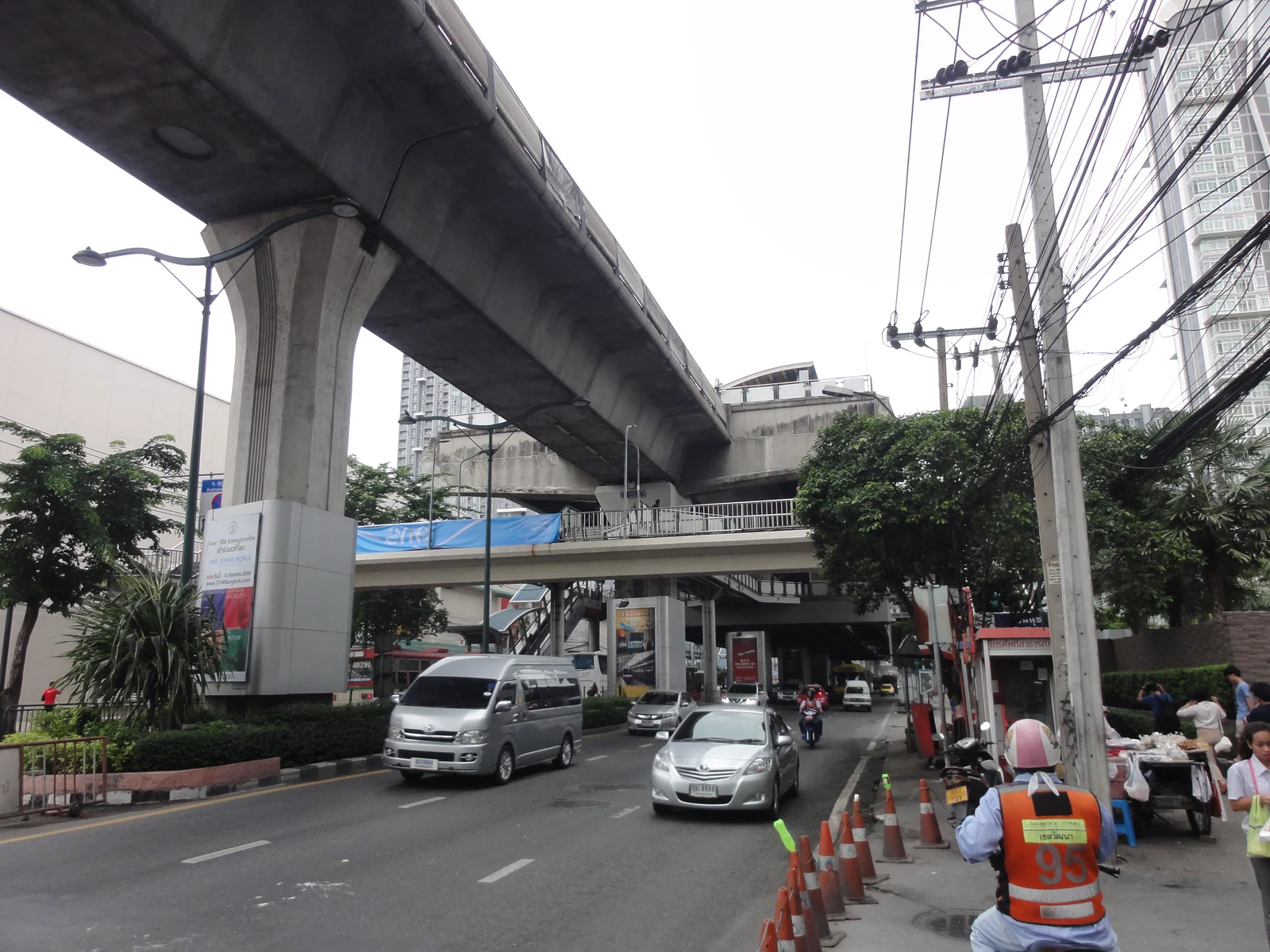
Start with the places you actually travel to
List your regular destinations, including work, university and family. Identify the station that serves each destination. A home chosen only for its proximity to your workplace may be less convenient on other days.
Use the official BTS and MRT network maps to check lines and interchanges before narrowing your search. Station count alone does not measure a journey: waiting, changing lines and walking out of a station all contribute to the total time.
Check the walking route, not just the map distance
For a shortlisted listing, locate the building entrance and the station exit you would use. Main roads, fences, crossings and routes around buildings can make the walk different from a straight line on a map.
During a viewing, try the route at a time similar to your regular commute. Look at pavements, lighting, pick-up points and shelter from rain. If you need a shuttle or connecting ride, ask where it stops and when it operates.
Compare nearby stations with the same budget
Search your main station and two or three neighbouring stations using the same rent, bedroom and floor-area filters. This makes differences in space and convenience easier to compare.
Use the map alongside listing results to explore project locations. Save a shortlist and ask our team about the actual unit, floor, outlook and availability before arranging a viewing. Project information does not confirm the condition of every unit in the building.
Check the route again before deciding
Services and routes can change. Consult the transport operator for current information before appointments or moving, and test your journey when possible. The right home should fit your budget, daily life and regular travel.